Skip to main content Skip to footer

People and Nature Survey 2025

People & Nature Survey 2025 - Summary Report

Check out the high level summary results of the 2025 People & Nature Survey in this report.

More results and analysis of the 2025 survey are available below.

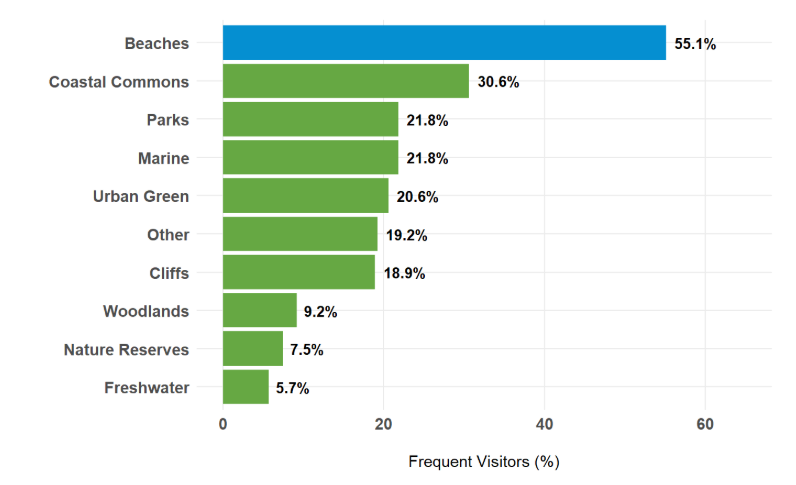
Beaches dominate natural space use - more than half of respondents (55.1%) Visit Guernsey's beaches on a daily or weekly basis.

Woodlands have the smallest overall visitor base but the most loyal users, averaging 1 daily visit per regular visitor. Access to woodlands helps build daily habits like exercise outdoors, and this represents a high-value segment for encouraging stewardship volunteering and wellness.

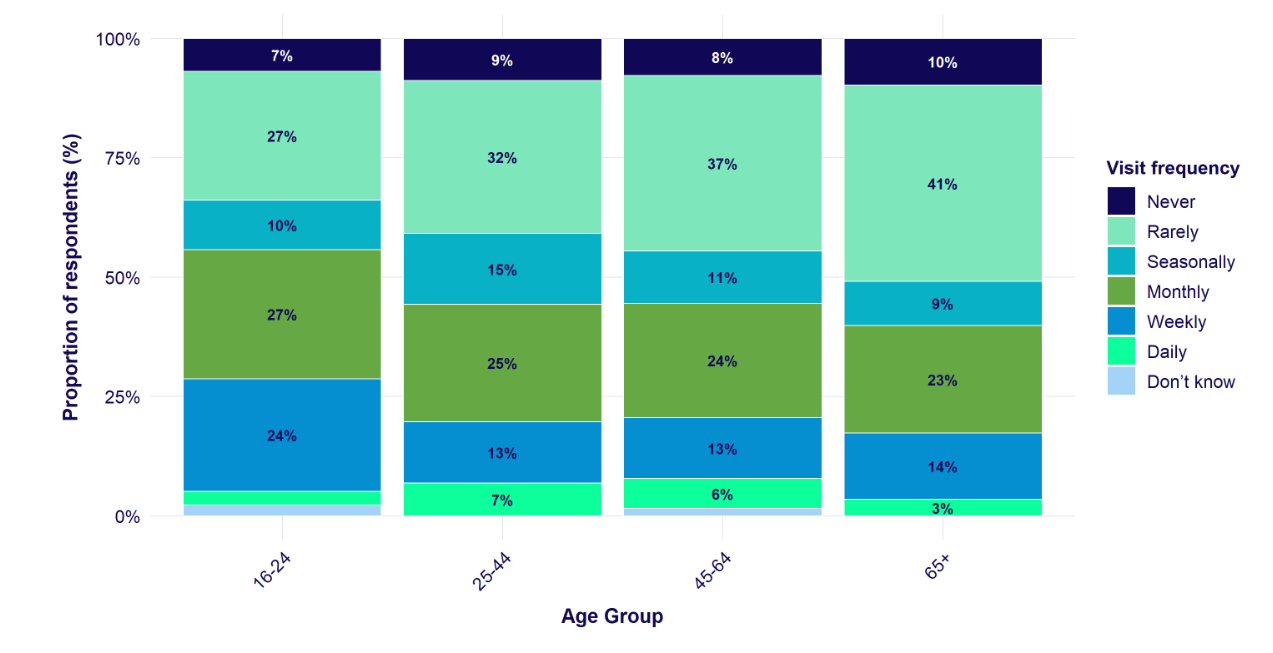
Young people less than 25 years old visit weekly at nearly double the rate of every other age group (23.6% vs approximately 12.8% for all others), but they also have the most rare visitors (27%), suggesting two groups of rare and frequent young visitors.

The 65+ group visit least often, with over 41% visiting rarely, even though they may have more time. 

Frequency of Visit to Natural Spaces

Beaches are the island’s primary natural asset, recording the highest number of visits of any site type. Note: the survey instructed respondents who visited the beach primarily to swim to select ‘Marine’ rather than ‘Beaches’, meaning the beach visit totals recorded here reflect predominantly non-swimming activities such as walking and recreation. The true combined beach and marine engagement is therefore higher than either category shows individually.

Woodlands have the highest user “loyalty” with an average of 14 visits per regular visitor per fortnight. While the total audience is smaller, these users are the most frequent, likely using these spaces for daily habitual exercise.

Coastal Commons and Cliffs form a high-traffic “Secondary Tier”. Cliffs visitors show high dedication (with an average of 11 visits per fortnight), suggesting these are essential for repeat wellness activities.

With an average of 9 visits per visitor per fortnight, parks are the least utilized by regular visitors, which could represent niche interest or reduced accessibility compared to coastal and woodland areas.

Visiting Natural Spaces

Engagement with Guernsey’s natural spaces is shaped by both who visitors are and where they go.

Most of us live close enough to natural spaces that distance isn't an obstacle to enjoying nature- those living within 15 minutes of a natural space and those living further away had similar visit patterns. 

Women’s engagement dips in specific age groups and is driven primarily by physical and mental health motivations, with time and accessibility as the main barriers. 

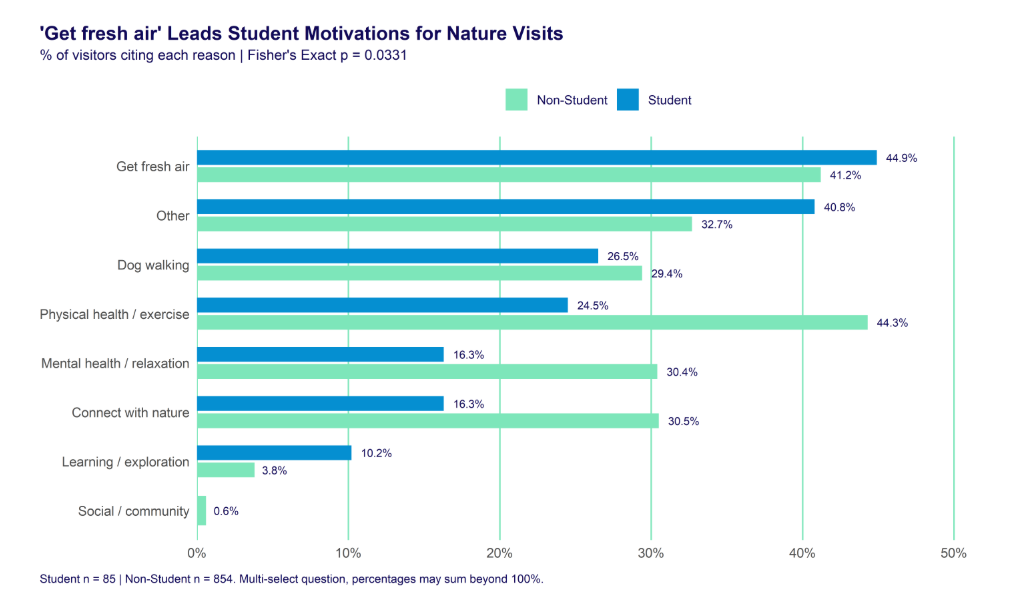
Students visit significantly less frequently than non-students, and their space preferences are statistically indistinguishable from the general population — challenging the assumption that they are a uniquely high-engagement demographic.

The three destination parishes each carry a distinct character — Vale and Castel attract high volumes across multiple space types, while Torteval draws a smaller but notable share of visitors primarily for coastal and cliff access.

There is no statistically significant evidence to suggest that disability status affects how often a person visits a natural space but this is in part due to small numbers of respondents in this group.

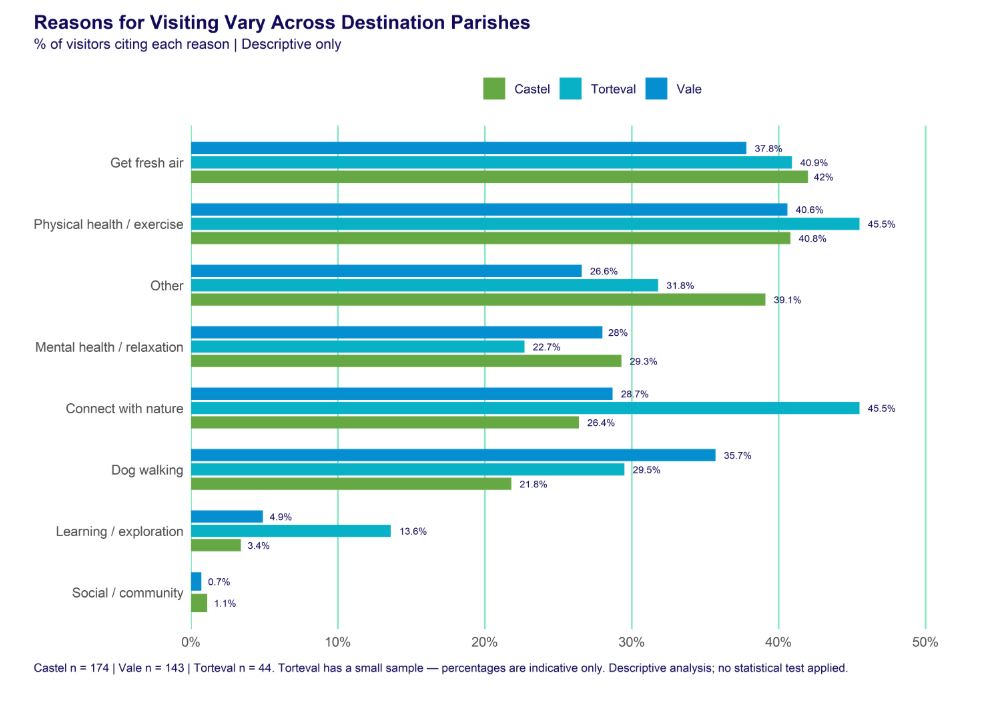
Vale, Torteval, and Castel are identified as destination parishes - spaces that attract visitors from across the island. This reflects the distinct geographic assets of these areas.

Visitors to Vale primarily use the area for physical health/ exercise; visitors to Castel primarily use the area to get fresh air; visitors to Torteval use the area to connect with nature.

Visualise how survey respondents are traveling between parishes to connect with nature here: Guernsey People & Nature Survey 2025 Interactive Map

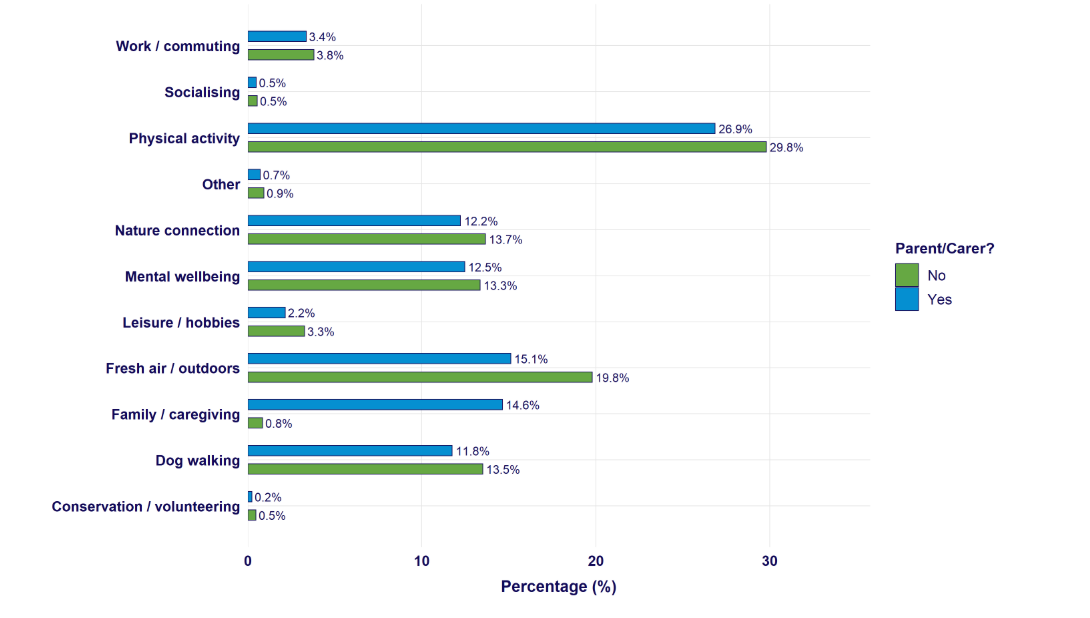
The analysis reveals a significant relationship between respondents with children under 18 and those without and their motivation for visiting natural spaces - the presence of children significantly alters how and why individuals engage with Guernsey's natural environment. The data suggests that natural spaces serve as a functional tool for parents for childcare and family bonding. Getting fresh air and spending time outdoors remains a high priority regardless of parental status, acting as a universal motivator for visiting natural spaces.

For students, getting fresh air is the most frequent reason cited for visiting natural spaces, whereas for those of us who aren't students, the biggest motivation is physical health/ exercise.

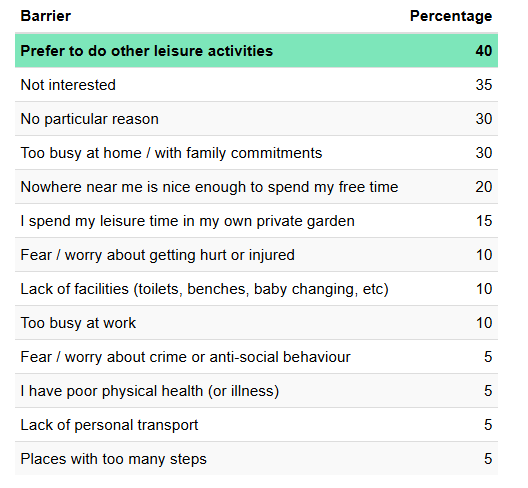
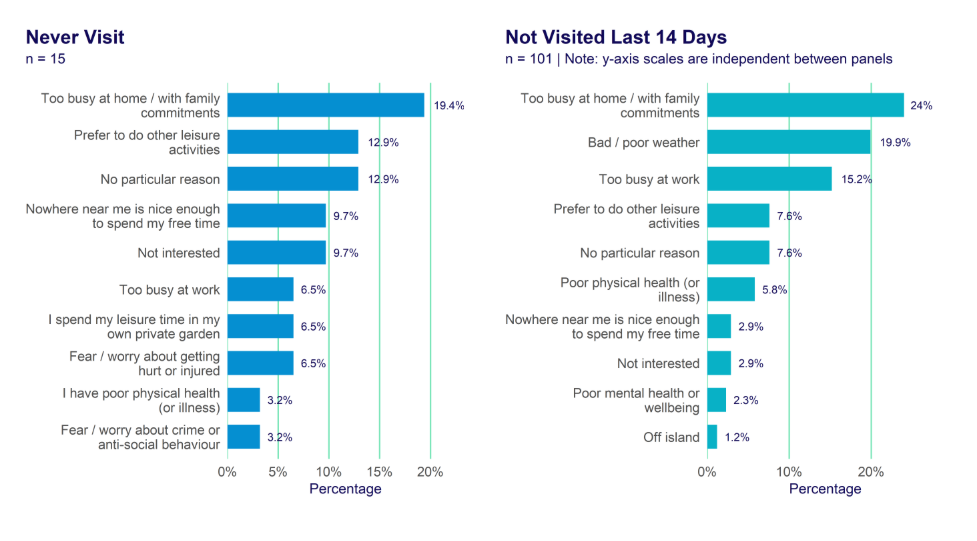
Respondents who never spend time in nature reported that the main reason for this is that they prefer to do other leisure activities, followed by not having an interest.

Other reasons included being too busy at home or with family commitments, or nowhere near them being nice enough to spend their free time.

Of those respondents who identify as female and who never visit natural spaces, or who had not visited in the last 14 days, the main reason for this was cited as 'Too busy at home/ with family commitments'.

Barriers to visiting natural spaces

2% of respondents noted that they never visit any public natural spaces. Of those 20 individuals, 15 were women.

Environmental Pressures

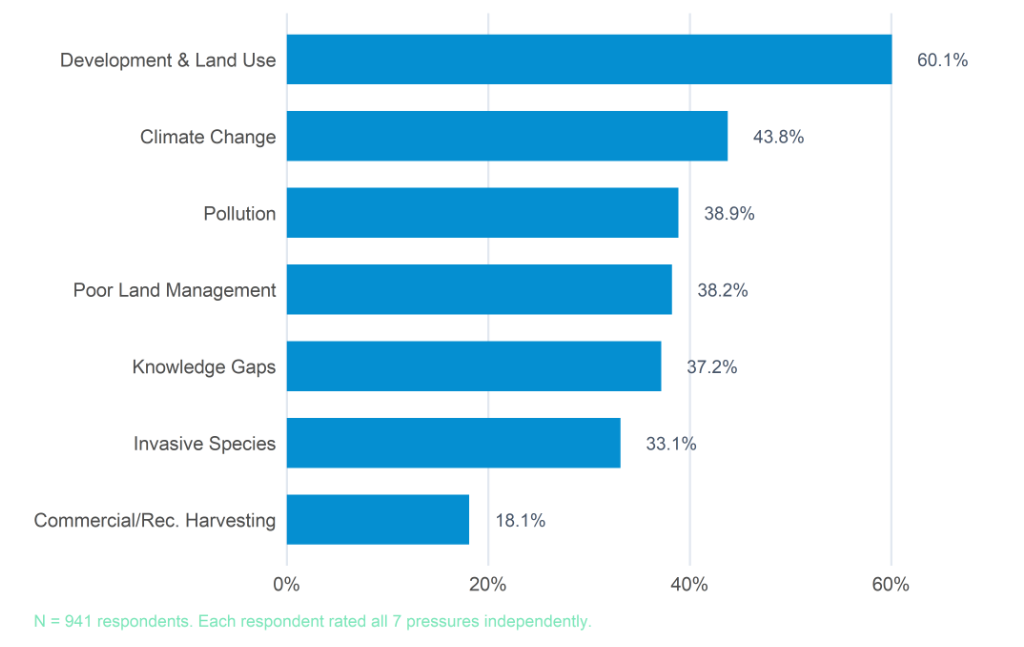
Respondents were asked which environmental pressures they considered significant, and how concerned they felt overall. Seven pressure categories were assessed: development & land use; pollution; climate change; invasive species; poor land management; commercial & recreational fishing and harvesting; and gaps in knowledge and understanding.

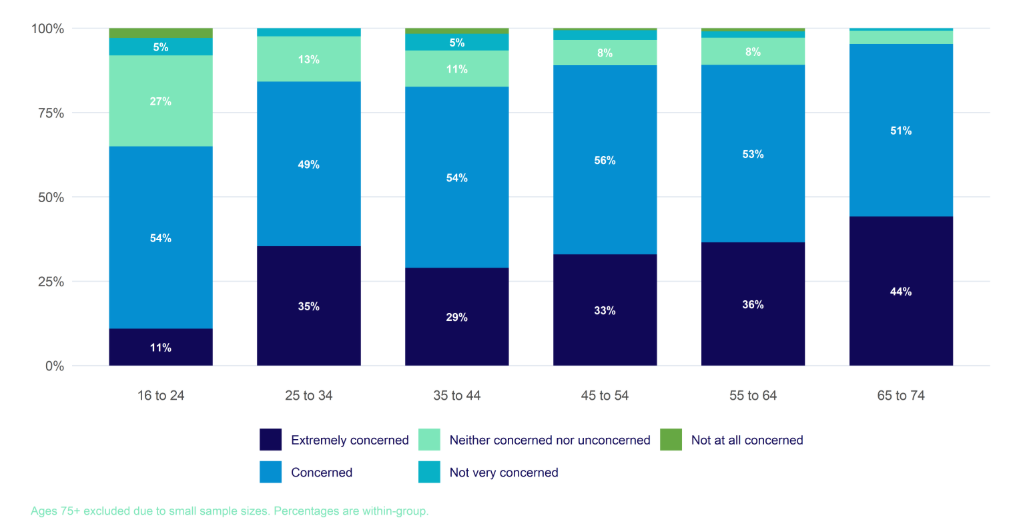
83% of the respondents were either 'Concerned' (52%) or 'Extremely Concerned' (31%) about the pressures faced by Guernsey's natural environment, confirming that environmental urgency is a mainstream sentiment across the island.

Environmental concern in Guernsey is broad and deeply held across all demographics. The types of pressures residents worry about are remarkably consistent regardless of where they live, how old they are, or their gender. However, the intensity of that concern — how urgently people feel about these pressures — is shaped primarily by ageeducation level, and environmental organisation membership. Parish of residence plays no meaningful role in either dimension.

Education level is a primary driver of environmental attitude in Guernsey. The data reveals a highly significant divergence in concern levels across different educational backgrounds. This indicates that a resident’s academic pathway significantly shapes their perception of environmental urgency, requiring a segmented approach to public engagement and education initiatives.

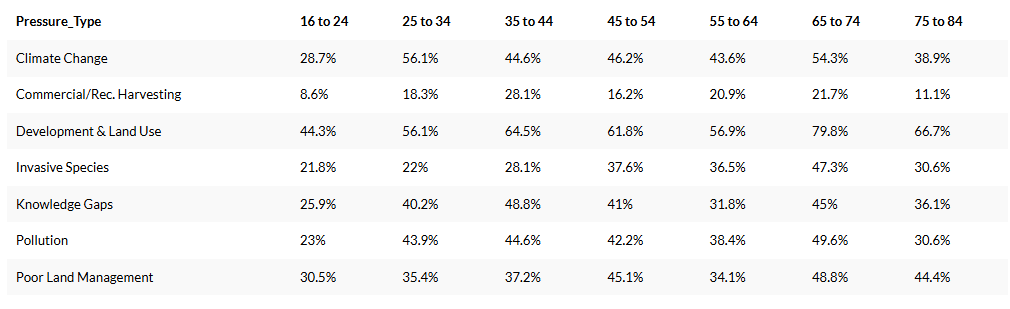
60% of respondents stated that they considered development and land use pressures in Guernsey 'Significant'. This pressure is stated as the dominant concern in every parish - it accounts for approx. 22% of all significant pressure ratings, indicating that this pressure is a consistent, Guernsey-wide priority rather than a parish-specific issue.

Analysis found that there is no statistically significant difference between the 16-24 age group and all other age groups - this tells us that there is no generational gap in terms of what is considered a significant pressure on Guernsey's natural environment. However, concern for development is much higher in older residents compared to younger.

Concern regarding Knowledge Gaps is most prominent among those aged 35–44 (48.8%). This suggests that mid-career professionals or young families are the most likely to feel that a lack of information is hindering environmental protection.

Recognition of Invasive Species as a significant pressure shows a steady upward trend as age increases, rising from 21.8% in the youngest group to 47.3% in the 65–74 group.

While residents across Guernsey agree on what the environmental pressures are, their emotional response to these pressures varies significantly by age. Statistical analysis confirms that age is the primary demographic driver of environmental concern intensity. This suggests that while the ‘Nature Emergency’ is a shared concept, the perceived urgency of the situation is experienced differently across generations. The 16–24 demographic is the most undecided, with 27% reporting they are “Neither concerned nor unconcerned” — the highest neutrality rate of any group. The 25–34 Pivot: This age group marks a major shift in intensity; the percentage of “Extremely concerned” respondents jumps from 10.9% to 35.4% compared to the youngest cohort, signalling a sharp rise in environmental anxiety as residents enter adulthood.

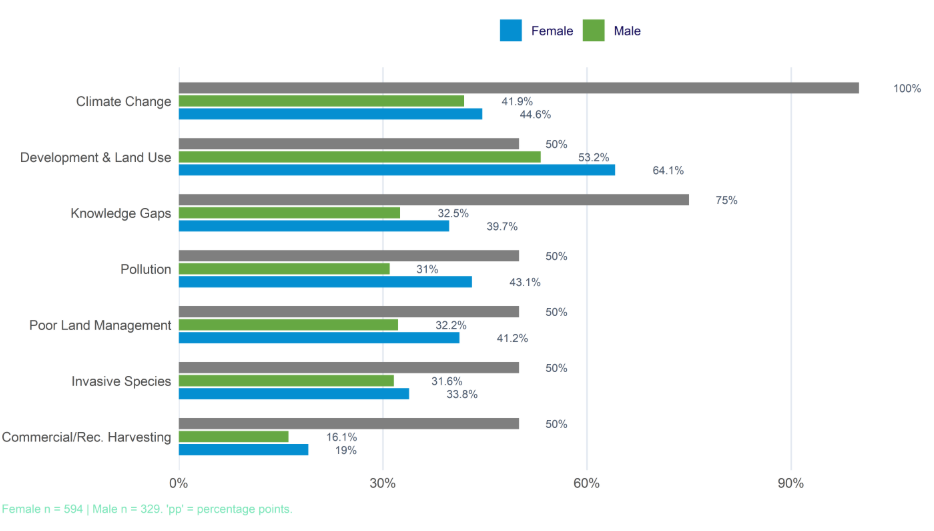
There are meaningful differences in perception of pressures between men and women. Women consistently perceive environmental pressures as more significant than men.

Nearly 40% of women identify a lack of information/ knowledge as a significant pressure, compared to 32.5% of men, suggesting a stronger desire for more data-driven environmental communication among female residents.

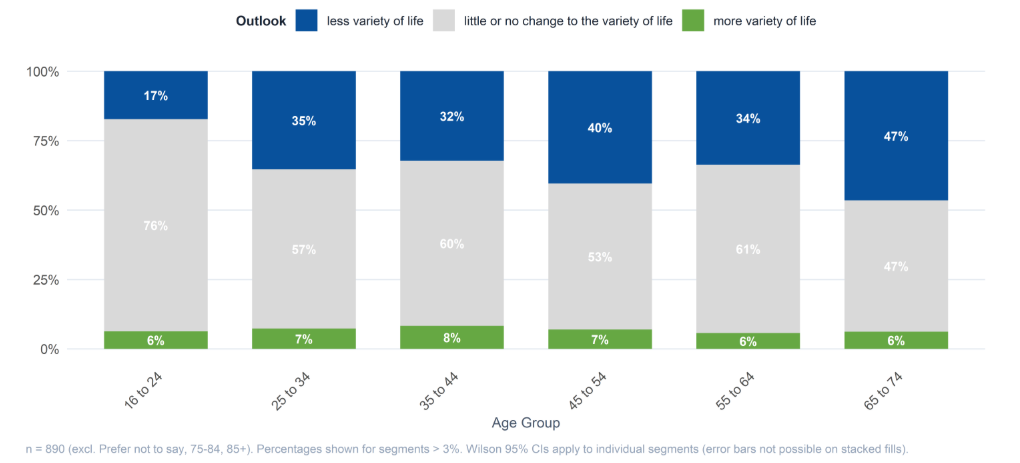
Younger residents expect stability - concern regarding changes in species variety over the next 5 years rises sharply with age.

Over 25 years, all age groups converge towards expecting decline in species variety.

Visualise the levels of environmental concern between parishes here: Guernsey People & Nature Survey 2025 Interactive Map

Biodiversity Outlook

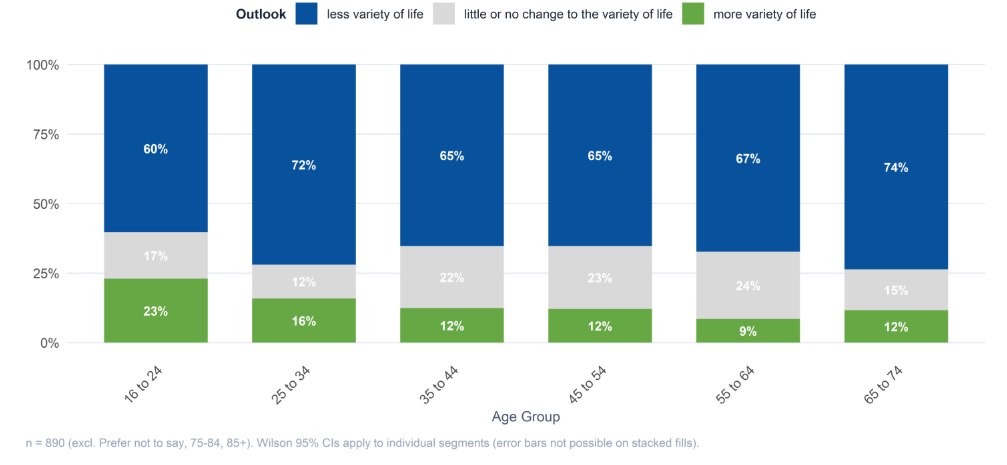
This section examines how different age groups perceive future changes in species variety over 5-year and 25-year horizons.

Analysis indicates that the age of a respondent is a significant predictor of their outlook on Guernsey's biodiversity. The youngest demographic (16–24) appears notably more optimistic or neutral compared to older cohorts. This group showed the highest belief in stability, with 76% expecting “little or no change” in the variety of life. They also reported the lowest concern for decline, with only 17% anticipating “less variety of life” — a figure significantly lower than any other age group.

There is a visible trend where concern regarding biodiversity loss increases with age: respondents aged 45–54 and 65–74 show much higher levels of pessimism, with 40% and 47% respectively expecting a decrease in species variety.

The data suggests a generational divide in environmental perception. Younger residents may perceive the current state of nature as a “baseline”, leading to an expectation of stability. In contrast, older residents who may have personal memories of higher biodiversity levels in Guernsey from previous decades are significantly more likely to predict a continued decline.

Participation in Environmental Activities

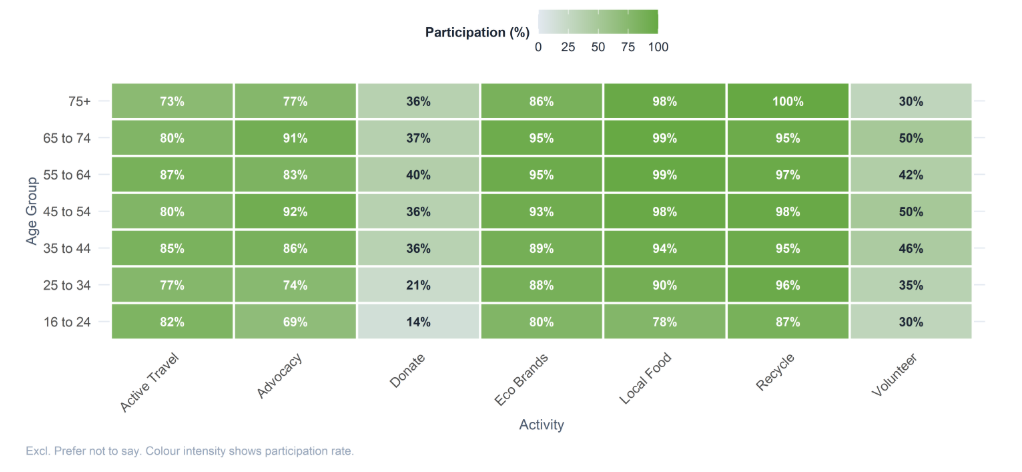
The data shows that recycling is universal, but that volunteering and donating to support an environmental or conservation organisation lag across all ages.

Buying local food and eco-friendly brands peaks between ages 45 and 74, suggesting sustainable shopping is a mature habit linked to household stability and local ties.

While the 16–24 group is active, they have the lowest engagement in Advocacy and Local Food. The 45–54 group leads in Advocacy, showing that mid-life residents are the most vocal environmental supporters.

Active Travel peaks in the 55–64 group but drops significantly in the 75+ group, highlighting age-related physical barriers.

Thank you to Umbizo for their time and expertise in analysing and visualizing the data.

This website uses cookies to enhance your browsing experience.